
400-Day Clock Mun Gallery – More Info
Horolovar Collection # 2
~ from “The Horolovar Collection”
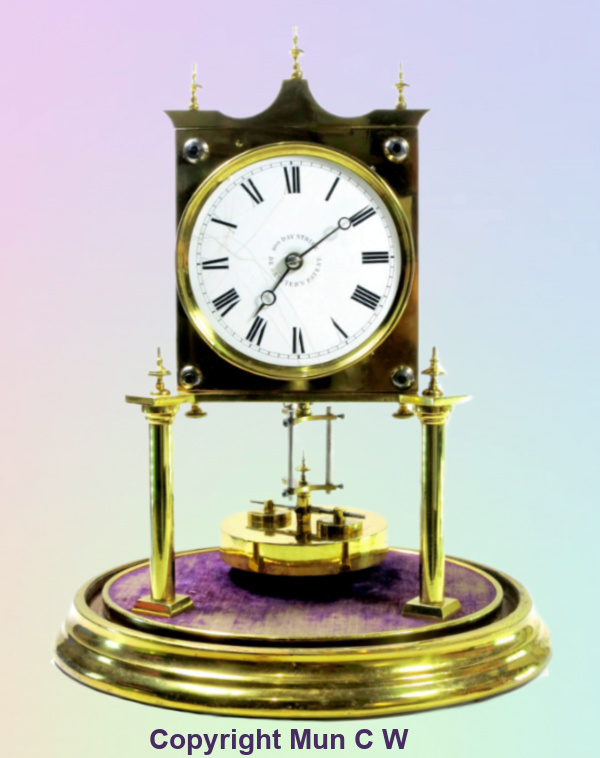
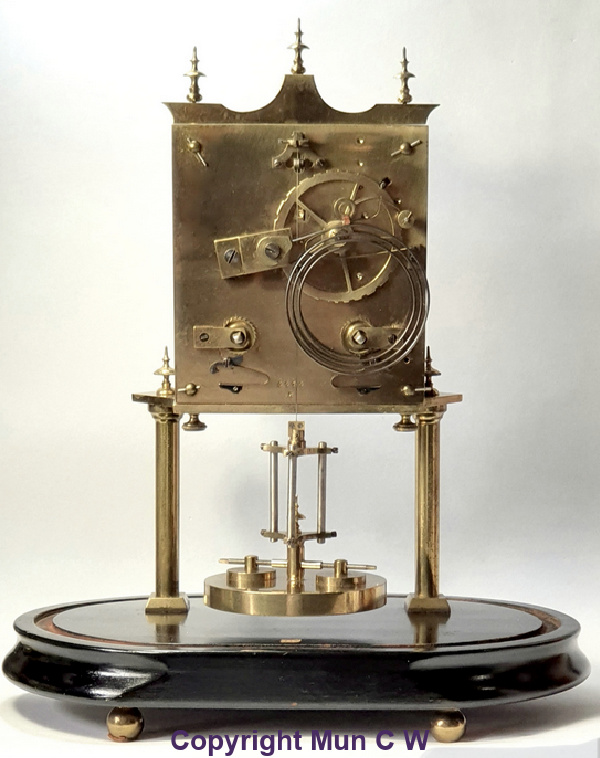
Here is a beautifully made clock. Its wheels and pinions are of such fine design that the movement is more typical of French workmanship of the period than German. However, the overall design of this striker so closely follows the time-only clock on the previous page that there seems to be no question about the fact that it was also made by Jahresuhrenfabrik. Around the center of the dial are the words: 400 DAY STRIKE, DE GRUYTER’S PATENT (continues below)
Horolovar Collection # 2 Back
~ from “The Horolovar Collection”
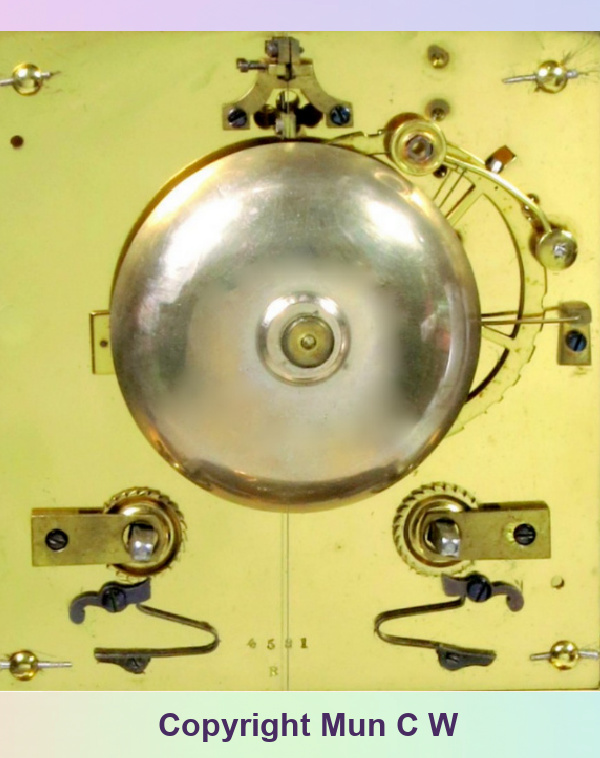
(continued from above) Some light on the question of where the name “400-Day Clock” originated is shed here, for this is the earliest known use of the term. It’s in English on a dial of a “Year Clock” made in Germany, and patented by a man from Amsterdam. F.A.L. De Gruyter’s German patent on this striking 400-Day Clock is number 29,348 and is dated May 18, 1884. (See appendix- page 140.)
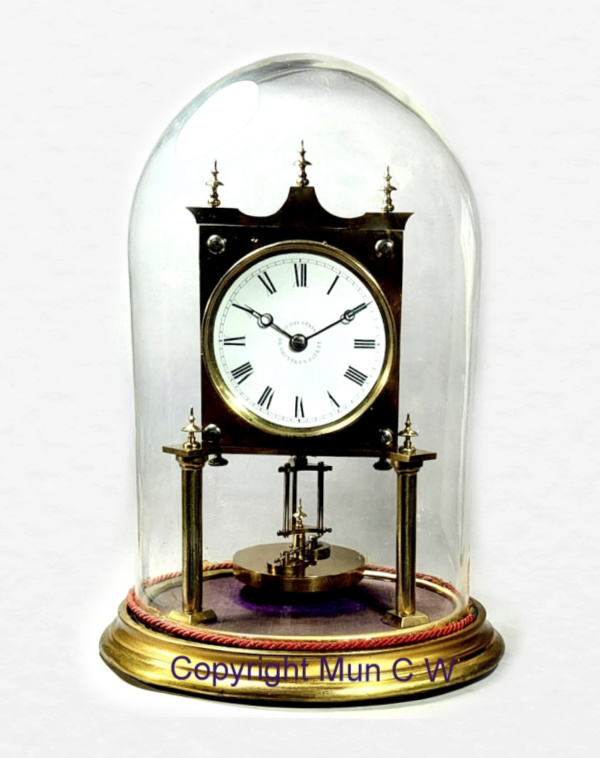
In addition to having all of the fine points mentioned for Clock No. 1, this striker model is unique in that it has the original glass dome to fit the base which has an unusual, almost elliptical shape.
As the illustration shows, the strike is on a bell. The movement has a Graham “dead beat” escapement.
Horolovar Collection # 3 striker
~ Mun C W
When HC 3 striker was in the Horolovar Collection it was housed in a wooden base covered by an oval glass dome. Terwilliger apparently could not find an elliptical glass dome to fit the original brass . He kept the brass base in the hope that one day he could find an elliptical glass dome to unite with the brass base for use with the striker as he had mentioned in the description of the striker that the oval glass dome was a temporary substitute for the original.
Apparently he could not find one and he eventually sold the striker together with the original brass base. The striker changed hands several times. When I bought the striker together with the brass base it took me quite some time to source an elliptical glass dome to fit the original brass base. The striker is now in a better state than when it was on display in the Columbia Museum of Antiquity.
Horolovar Collection # 22
~ from “The Horolovar Collection”
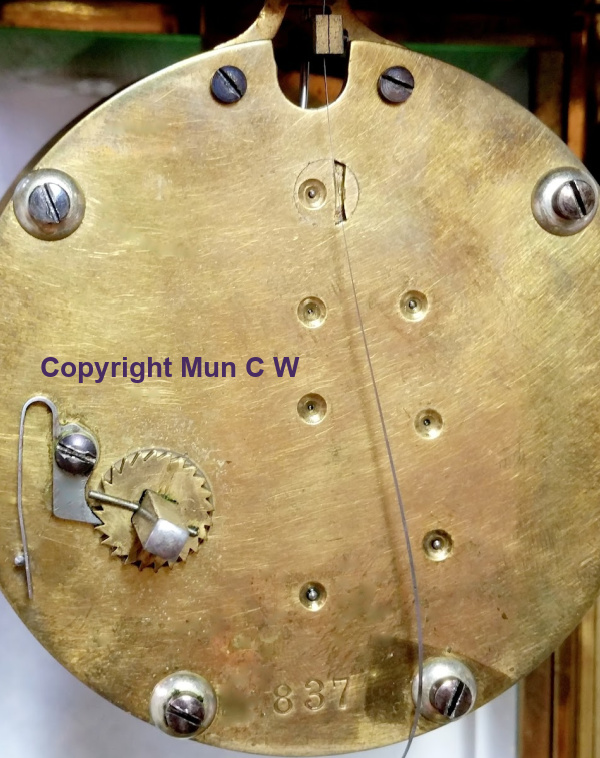
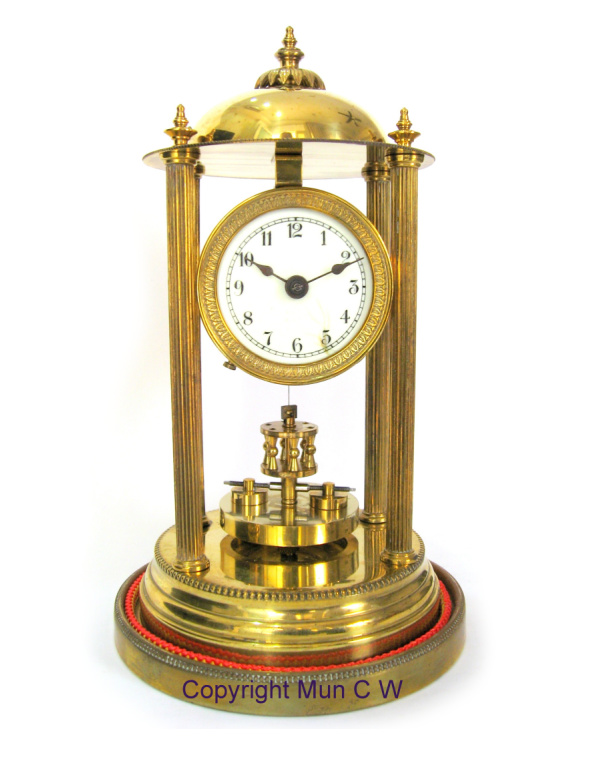
This model was illustrated in the 1905 Jahresuhrenfabrik catalogue as No. 262 and reveals the fact that Schatz was one of the makers of round plate 400-Day Clock movements. This is a very fine miniature clock, only 81/8 inches high. The case has all of the characteristics of French manufacture and could have been one of a type which Jahresuhrenfabrik was known to have purchased in France.
A feature of this clock which often seems to go unnoticed is the extra wheel and pinion in the wheel train. It is between the center wheel and the escape wheel.
Horolovar Collection # 23
~ from “The Horolovar Collection”
This clock has exactly the same movement as No. 22, but its refinements are hidden in this style of “louvre” case, which enjoyed some popularity for a few years. It is approximately 4″ shorter than the regular sized “louvre” 400-Day Clock. (See Clock No. 27.)
Horolovar Collection # 25
~ from “The Horolovar Collection”
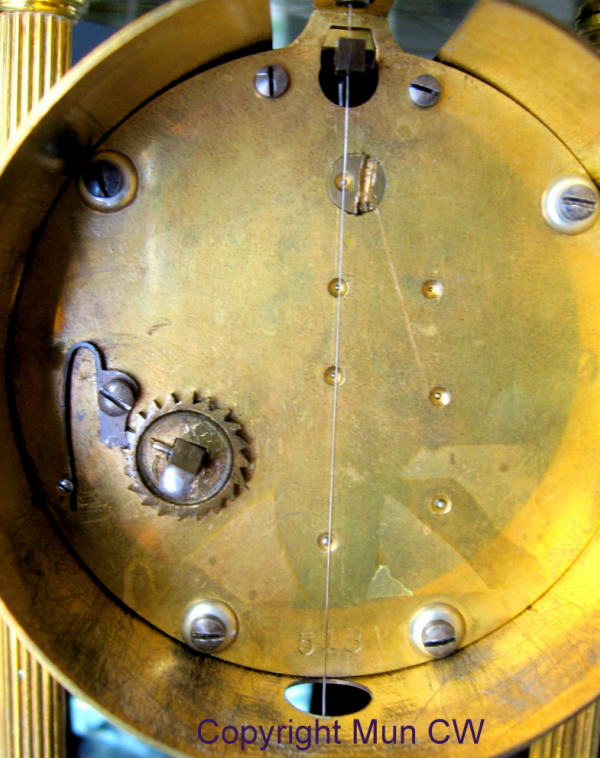
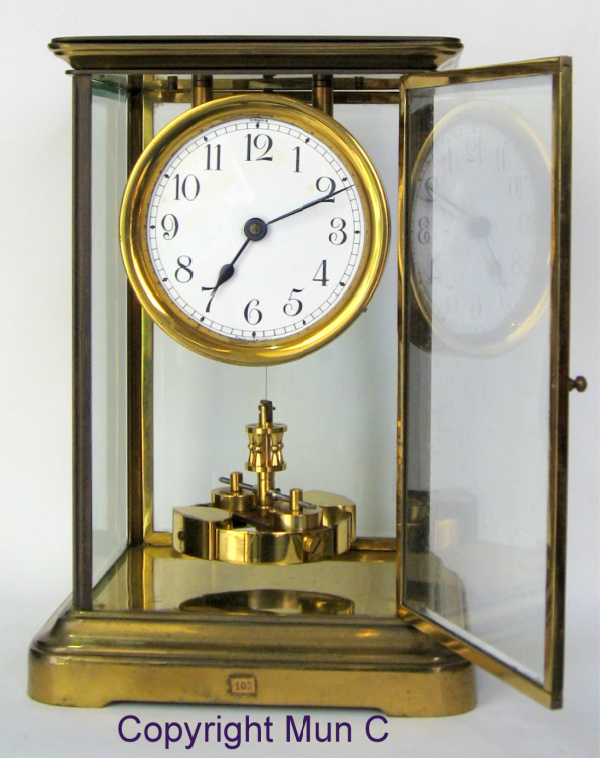
This is a very nicely cased clock quite similar to Clock No. 26 except for the fact that the movement is hung from the roof of the case rather than from the bezel, and the movement plates are of the more common shape. The chronometer type compensating pendulum was described in Clock No. 9.
Horolovar Collection # 26
~ from “The Horolovar Collection”
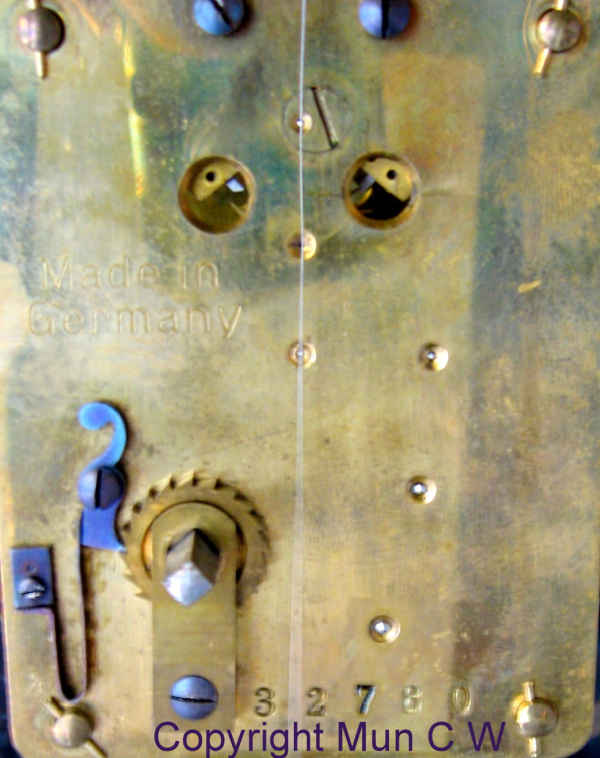
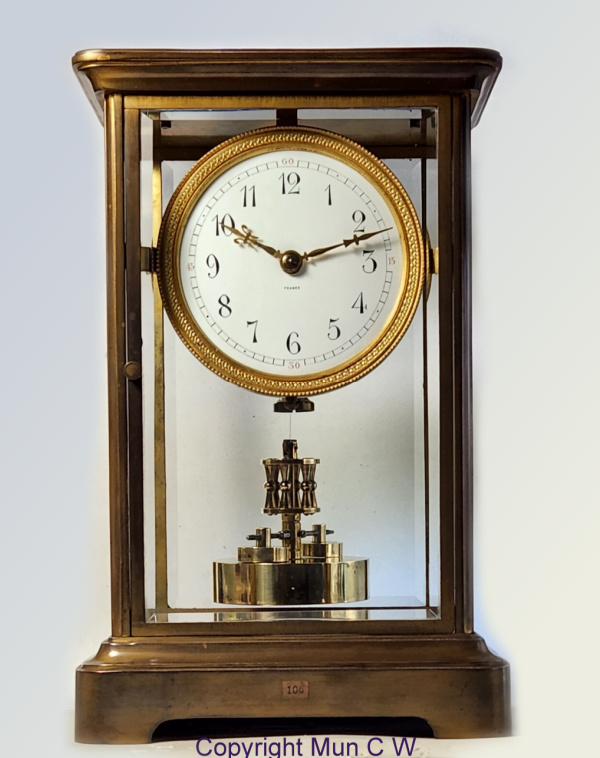
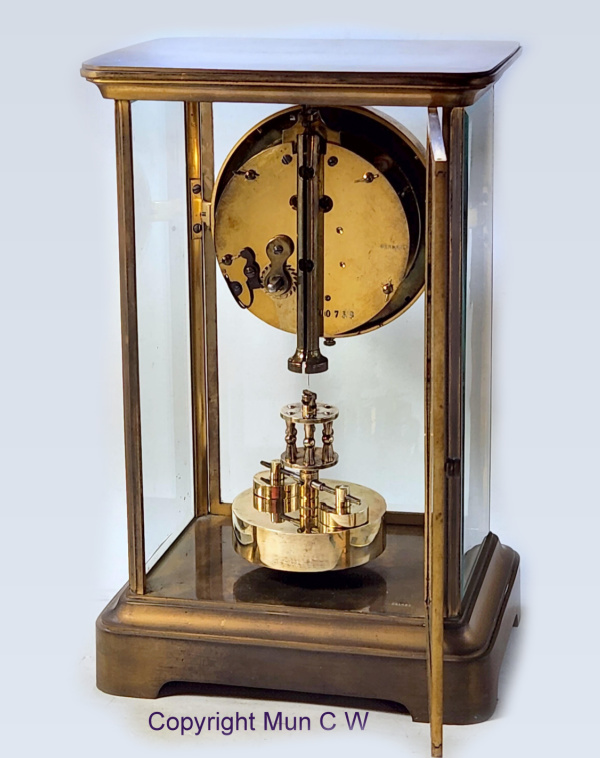
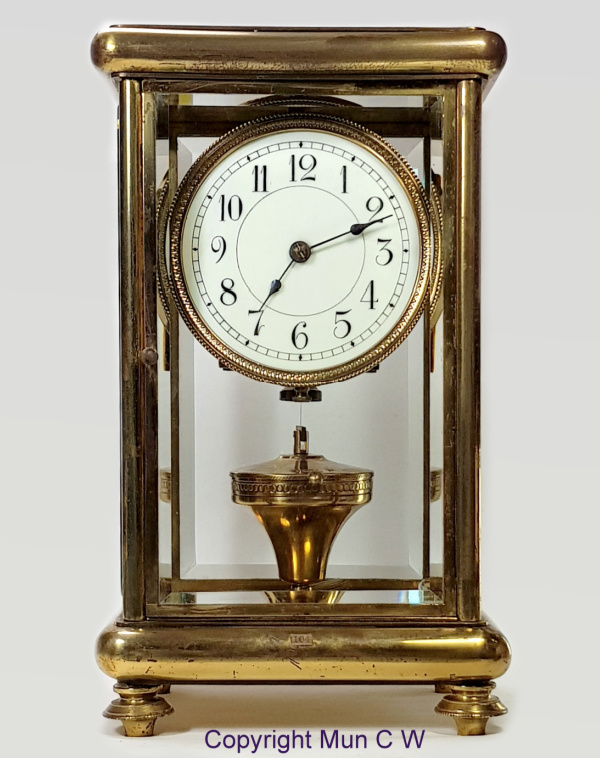
Example of a high quality cased 400-Day Clock.
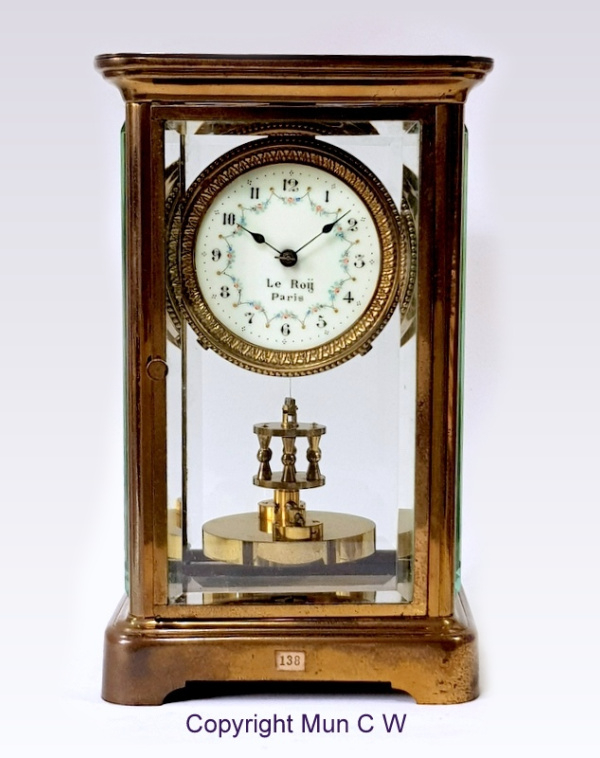
It is a German movement in a French-made brass and beveled-glass case.
Since the retail price of this type of clock was considerably higher than that of the popular models with glass domes, the clocks were sold chiefly through the better jewelry stores across the country. The most frequently seen names on the dials of these 400-Day Clocks are Tiffany & Company J. E. Caldwell (Philadelphia). Tiffany’s (New York), Bailey, Banks & Biddle and name may also be seen stamped on a movement back plate, but only quite rarely. For other quality clocks, see Nos. 22, 28, 29 and 30.
Horolovar Collection # 28
~ from “The Horolovar Collection”
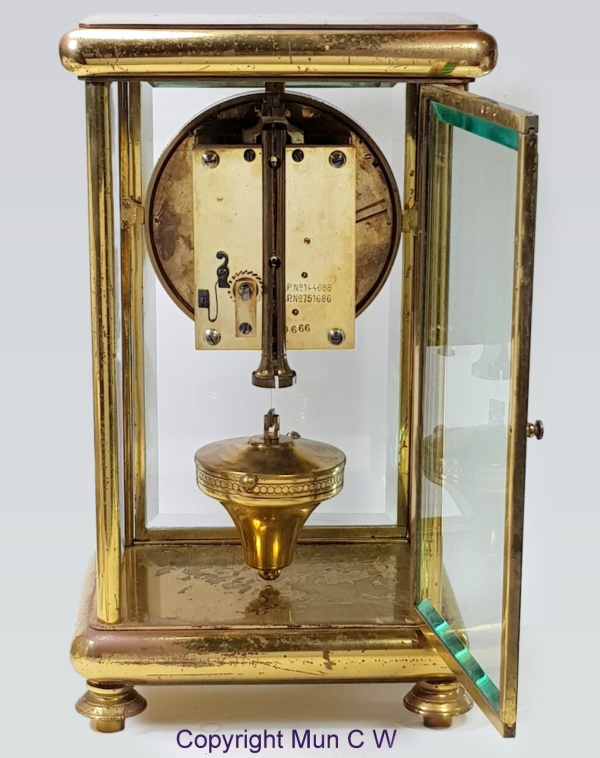
This clock has a quite heavy brass and beveled-glass case. Its pendulum is of an unusual “inverted bell” shape. Regulation is made by means of two weights on the inside of the bob which may be brought inward or outward by the turning of one the knobs on the pendulum’s periphery.
Horolovar Collection # 29
~ from “The Horolovar Collection”
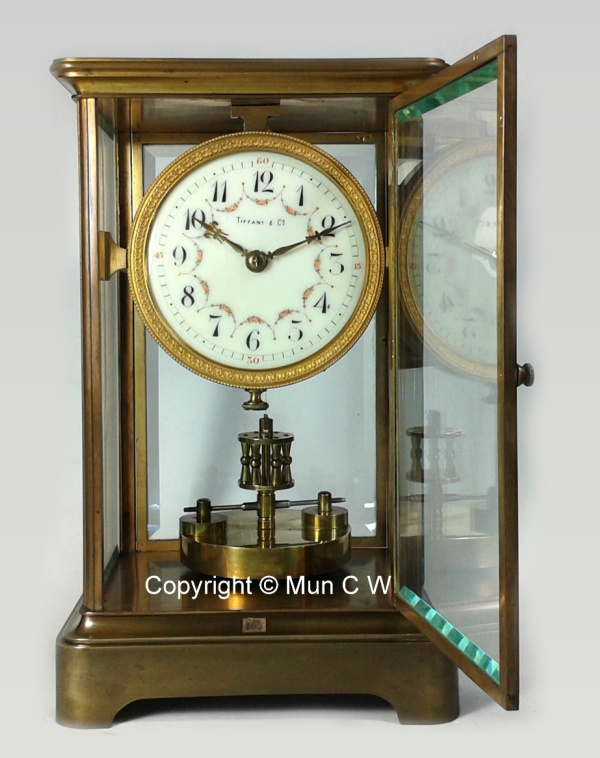
Here is another high-quality 400-Day Clock. It was originally sold by Tiffany & Company. The dial is particularly beautiful because of the fine coloring of the flowers in the garlands at the sides of the numerals. Tiffany purchased 400-Day Clocks from several different manufacturers, and some movements with round plates are to be seen in clocks with the Tiffany name.
Horolovar Collection # 45
~ from “The Horolovar Collection”
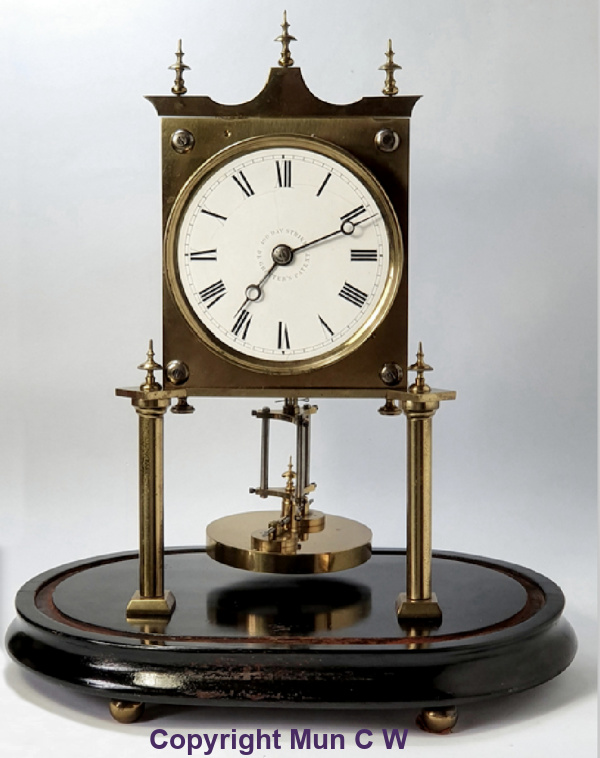
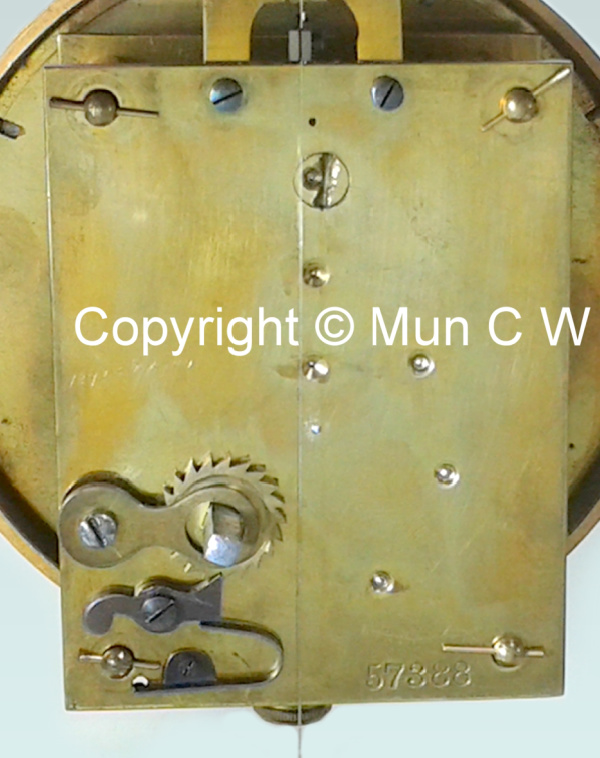
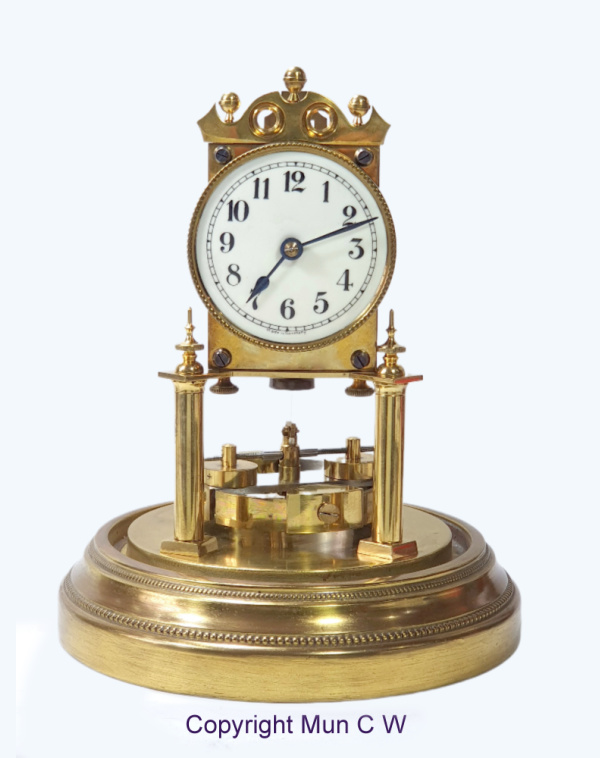
Made by Jahresuhrenfabrik. The same model, with a higher movement, appears in the 1905 Jahresuhrenfabrik catalogue as No. 202a. This model was apparently especially made with the movement lower to look better with the chronometer type “temperature compensating” pendulum.
Note the brass piece which rests on the base of the clock. This is the original cap which fits friction tight under the flared end of the suspension spring guard. Its purpose was to protect the exposed end of the suspension spring from becoming bent during shipping.
Jahresuhrenfabrik striker
~ Mun C W
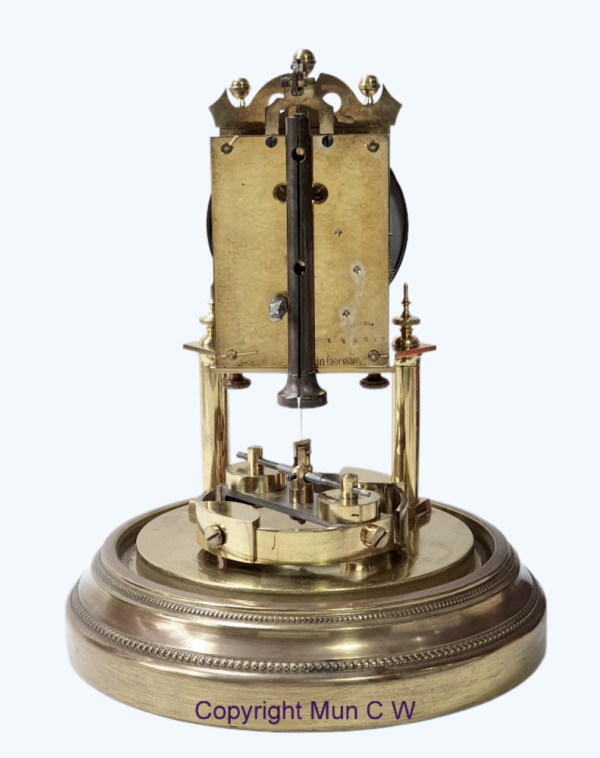
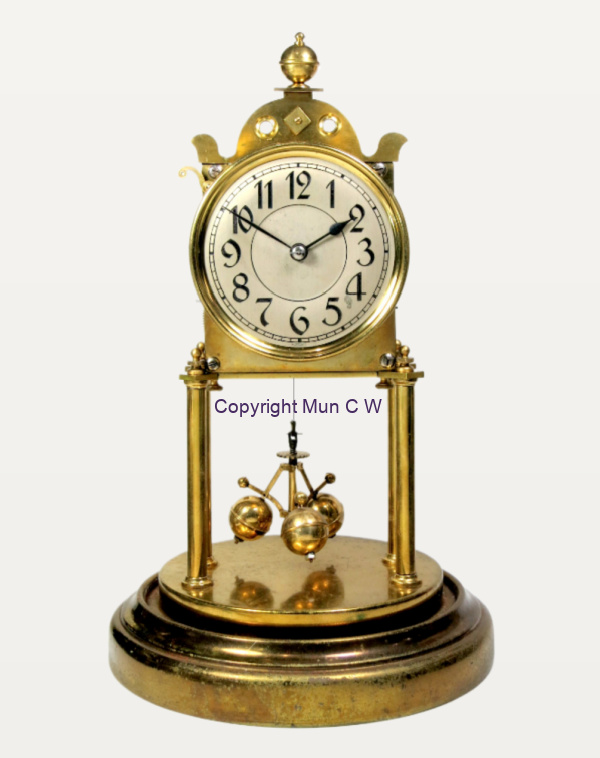
This Jahresuhrenfabrik (JUF) striker was featured in the 9th and 10th edition of the Horolovar Repair Guide. This striker was featured in the 1979 and 1986 Silent Auction but was unsold. It was finally sold in a 1989 Skinner Auction after Terwilliger had passed away.
Schnekenburger Wall Striker
~ Mun C W
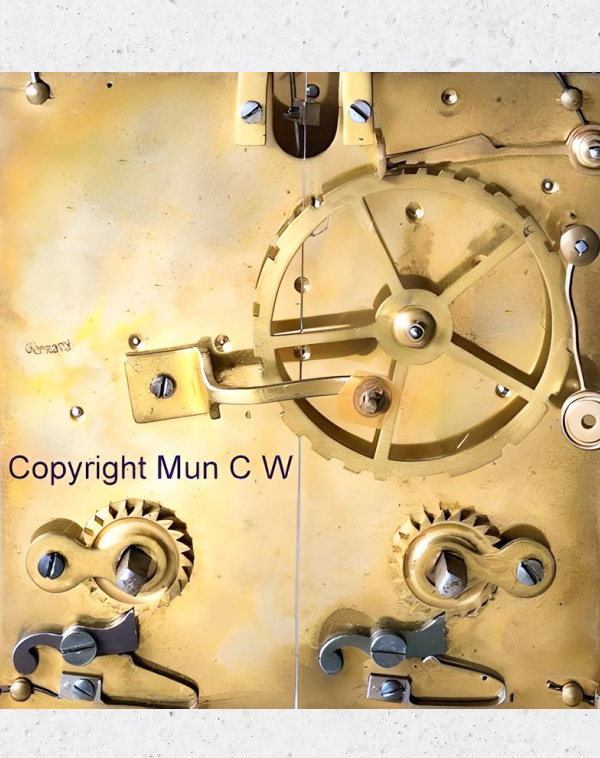
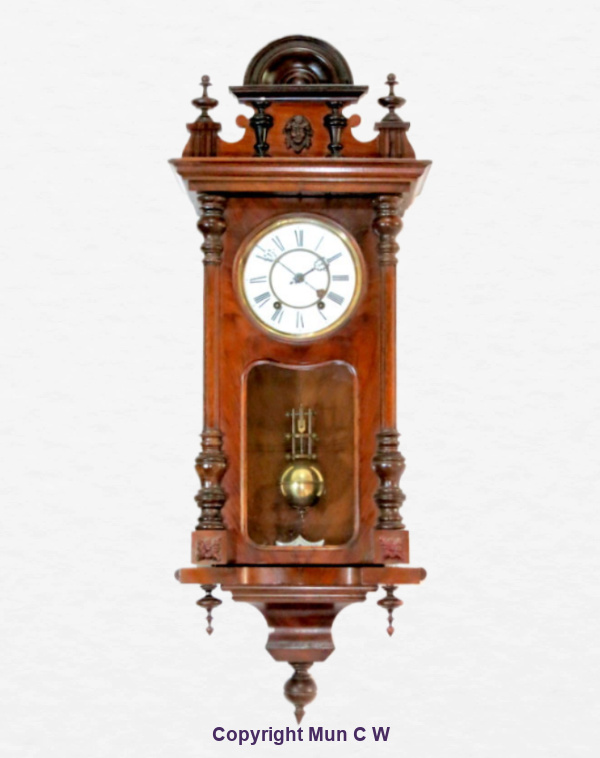
This wall striker by Schnekenburger was sold in a 1976 Silent Auction and was later sold in a Bob Schmitt auction in 1996. The clock had striking and running problems that were present when I bought it from a private collector in early 2000. I have since restored it to running and striking condition.
Schnekenburger Wall Striker Back
~ from Silent Auction Listing
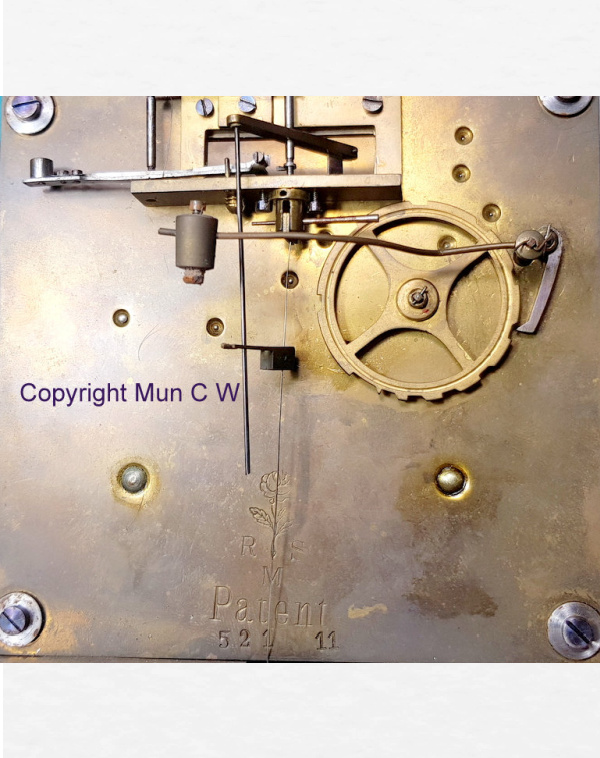
20 – GERMAN Rare Torsion Pendulum Striking Year Clock in walnut wall case by R. Schnekenburger, Muhlheim a/D. Designed to run and strike the hour and half hour (on gong) for one year without winding. Has rare form of duplex escapement in- vented by Wilhelm Kohler of Firth, Germany. Pat- ent illustration (#10519 – 11 May 1895) shown on page 129 of The Horolovar Collection. Close-up of actual movement shown on page 130. Note detail of regulating rack in bottom suspension block and large single-ball pendulum. Minute hand jumps seconds. Good enamel dial. Case is typically Black Forest. Enamel plaque in back of case reads: Jahresuhr Patent Kohler/aus der Uhrenfabrik/von R. Schnekenburger Muhlheim a/D (on Danube). Both movement and case were recently cleaned and are in excellent condition. Strike needs minor attention, occasionally skips or misses an hour.
 HeroesofHorology.com