
The Plato Clocks
by the editor
The Plato Clock represents one of the earliest digital displays of time and holds a prominent place in the history of flip clocks.
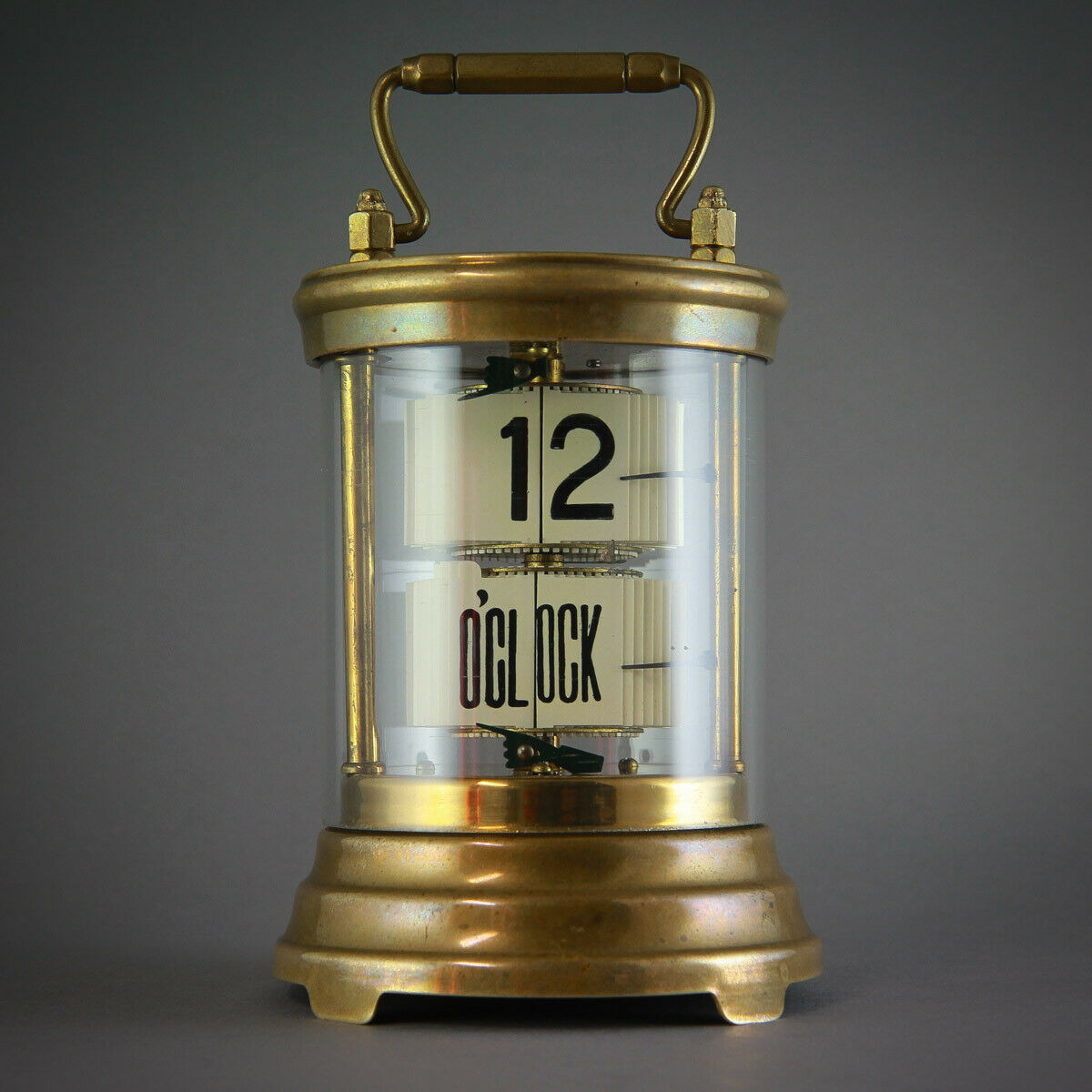
Charles O Terwilliger, Jr was a member of the National Association of Watch and Clock Collectors (NAWCC) from 1950 until his passing in 1988. Over his 38 years with the NAWCC, he serve in many roles, including multiple stints as Director and as the head of numerous committees, and serving as a member of the editorial board of the NAWCC Bulletin.[1] In this capacity, he wrote numerous Bulletin Articles, including the one published in October 1964 and most often used as the source when referring to the Plato Clock: “Eugene L. Fitch and the Plato Clock.”[2] Less widely available is the June 1970 revised and reprinted version that added important new information about the later reproduction Plato clocks.[3]
It is from these articles that we learn that no later than 1964, Terwilliger, through the Horolovar company, became the exclusive distributor of reproduction Plato Clocks made by Josef Mergenhagen of Germany. This included a traditional vertical model as well as a horizontal model styled after an earlier Eugene Fitch patent.[2] J. Mergenhagen’s buisness was absorbed by Karl Lauffer Uhrenfabrik at Schwenningen, Germany in 1965.[3] It was under this company that the Plato Clock line was expanded to include many ornate plato-type clocks, again, only available in the US through Terwilliger’s Horolovar company.[3][4]
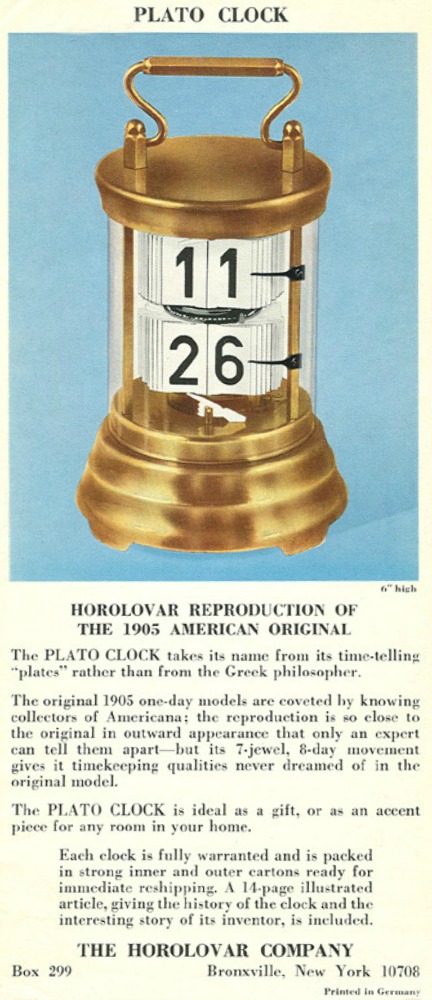
Charles Terwilliger’s influence over collecting of the Plato Clock does not end at the import of the German made, more modern Plato Clocks. Under the name of the Horolovar Company, Terwilliger contracted to have five historically significant and curious clocks reproduced for sale,[5] including a Plato Clock which he contracted to have made by Karl Lauffer of Germany. This reproduction would eventually be known by collectors as the “Horolovar Plato Clock.” With this upgraded reproduction, Terwilliger sought to produce an authentic recreation of the look of the original, first design of the Plato Clock, with a better mechanism than the original.
A newspaper article from January 1967 reported that an original Plato Clock belonging to James Niehaus of Dayton, Ohio (president of the Buckeye Chapter 23 of the NAWCC) was selected by “a New York manufacturer” as the model for reproduction.[6]
Unfortunately, the Horolovar Plato Clock, like it’s predecessor, the original Plato Clock, did not go big, and production of the Horolovar Plato Clock ran only from 1969[3] to 1971.[7]
In spite of this, no one person has influenced collection of all versions of the Plato Clock like Charles Terwilliger personally, and through his Horolovar Company. His NAWCC Bulletin articles remain the only authoritative sources regarding these clocks. And nearly every description of the Plato clock in collector circles, online auctions and online sources (not to mention the the bulk of the historical aspects discussed here) includes information that can be traced directly back to these articles.
Jump to video comparing the original to the Horolovar Plato
Plato Clock History
The Plato Clock made it’s appearance on the world stage at the famed 1904 St Louis World’s Fair, as a part of an exhibit by the American Electrical Novelty and Manufacturing Company (which would later become the EverReady Battery Company).[8][9]
The inventor of the Plato Clock was Eugene L. Fitch of New York City. Fitch received patent number 733,180 on July 7th 1903[10] for the clock that would become the basis of all subsequent models and styles of Plato Clocks. However, he did receive other patents as early as Dec 16, 1902[11] related to the clock, which probably explains some sources claiming that clock was invented in 1902.
The man who took an interest in Fitch’s invention and who is credited with actually getting these clocks produced, was Conrad Hubert, owner of the American Electrical Novelty and Manufacturing Company. Mr Hubert contracted with the Ansonia Clock Company to manufacture the clocks and marketed the clocks under the name “The Famous Ever Ready Plato Clock.”
Therefore a proper summary statement of the original clock’s history, in my opinion, should read something to the effect:
“The Ever Ready Plato Clock was invented by Eugene L Fitch of the United States in 1903, produced by Conrad Hubert of the American Electrical Novelty and Manufacturing Company (which would later become the Eveready Battery Company), manufactured by the Ansonia Clock Company and introduced at the 1904 World’s Fair.”
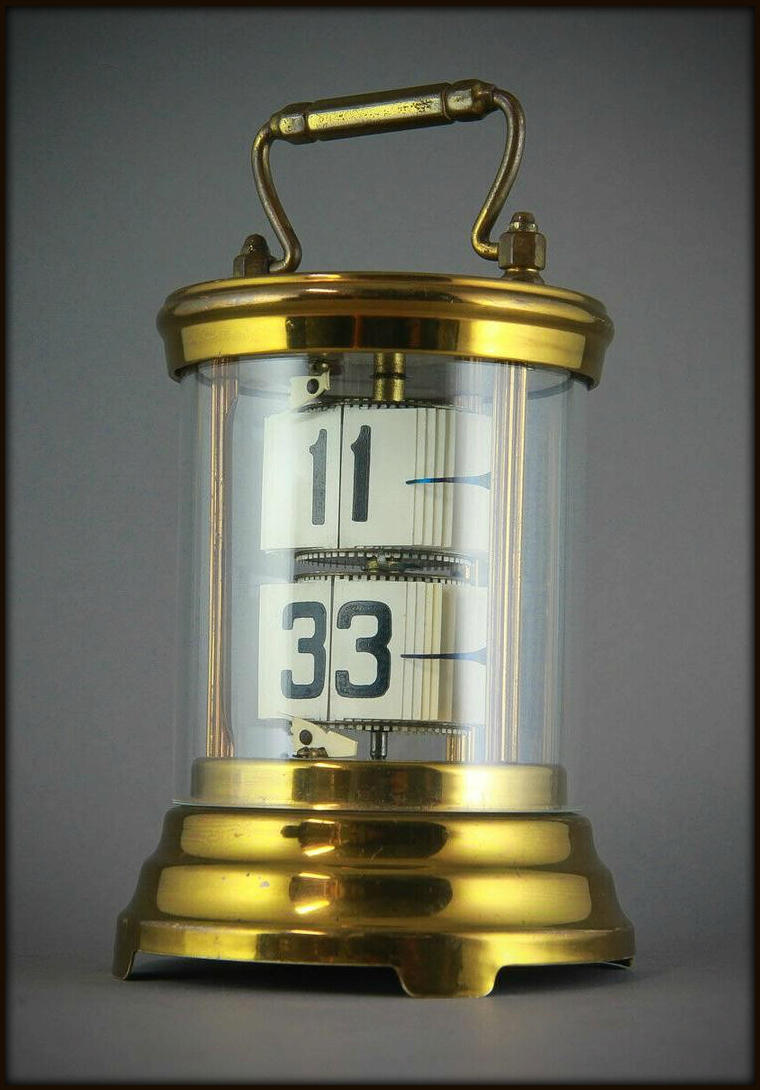
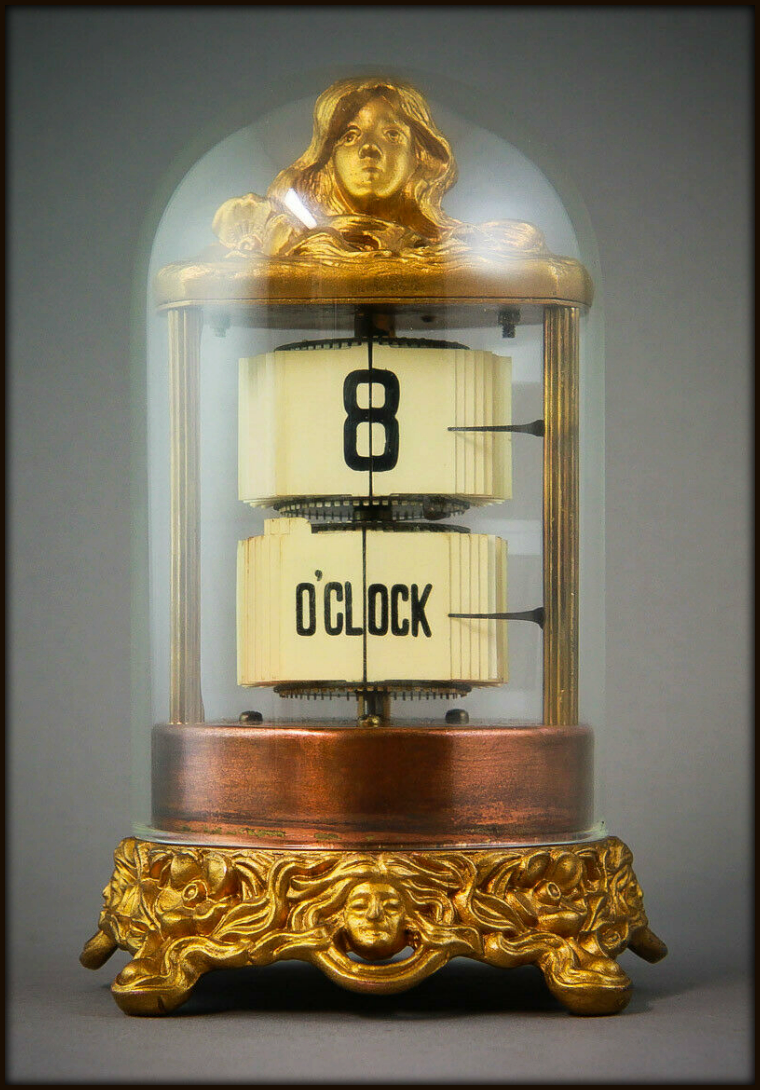
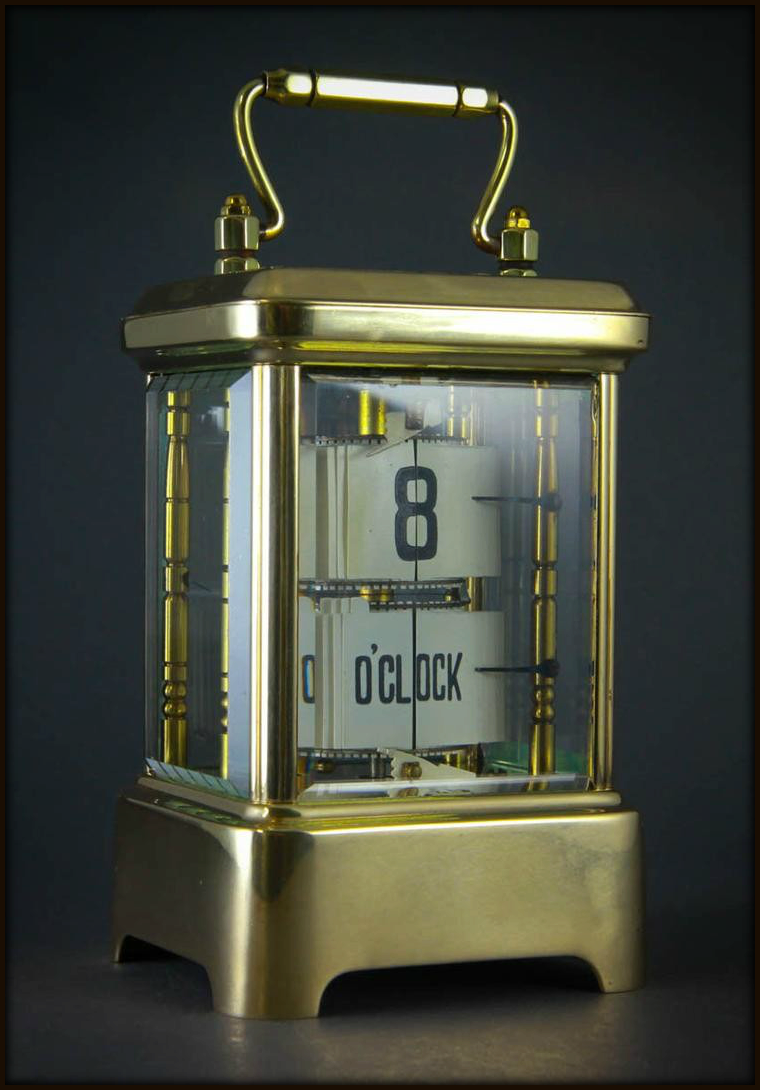
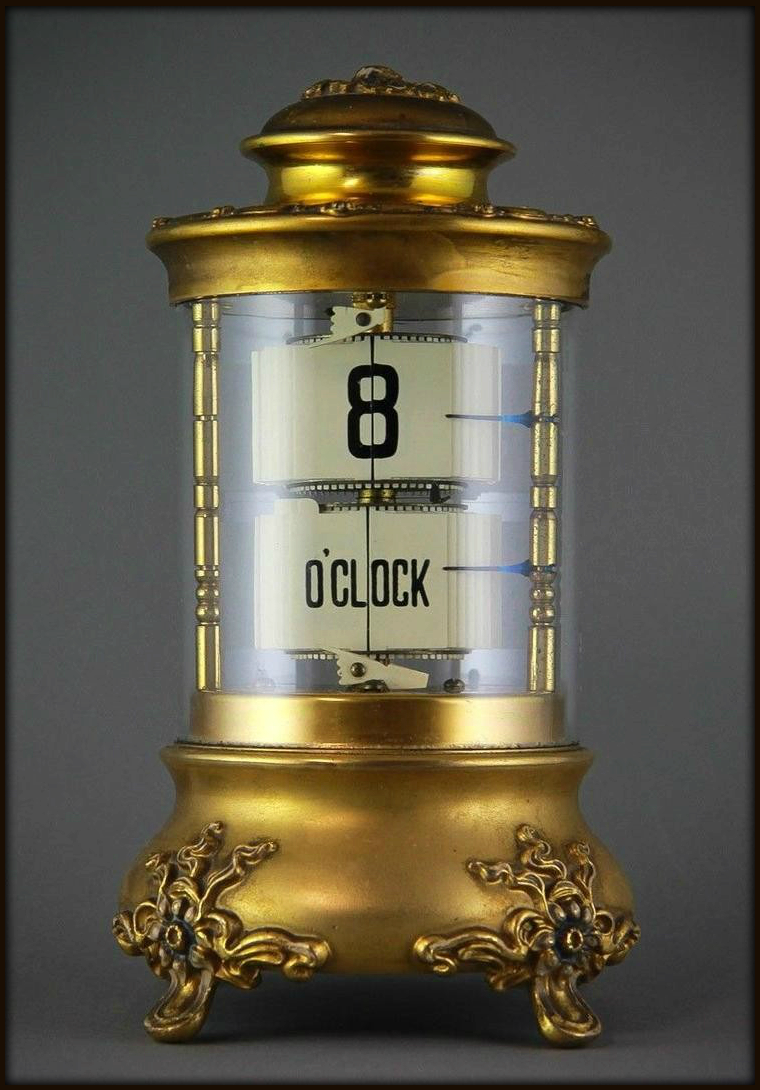
The Plato clock displays the time by what the inventor and distributor called numbered, “plates” that were originally made of celluloid (which is considered to be the first thermoplastic, in common use by 1870). The hours digits appeared stacked above the minutes with the plates flipping like pages of a book to reveal the advancing time. All versions were either stamped or cast brass with glass protecting the plates. American made Plato clocks came in four designs and could be had with either red, white or blue number plates – the colored plates bearing white numbers and the white plates displaying black numbers.[12] The four designs in some literature are numbered as follows:
Design 1 – The classic cylindrical style with a sleeve of glass, with handle on top.
Design 2 – The figurine topped clock, covered by a dome of glass.
Design 3 – Rectangle shaped clock with 4 separate pieces of glass, topped with a handle.
Degign 4 – A button topped (or what some collectors call a mushroom topped) ornate version with a glass sleeve.
    |
You will often read that the production number of these clocks was 40,000. However, this is pure speculation. This number was suggested as an estimate by Eugene Fitch’s patent attorney, Henry D Williams in 1942[3], many years after the production and selling of these clocks. The fact is, no hard production records exist and we have to take this as an educated guess, remembering that Williams was not actually involved in the production of the clocks.
The Last Plato Clock
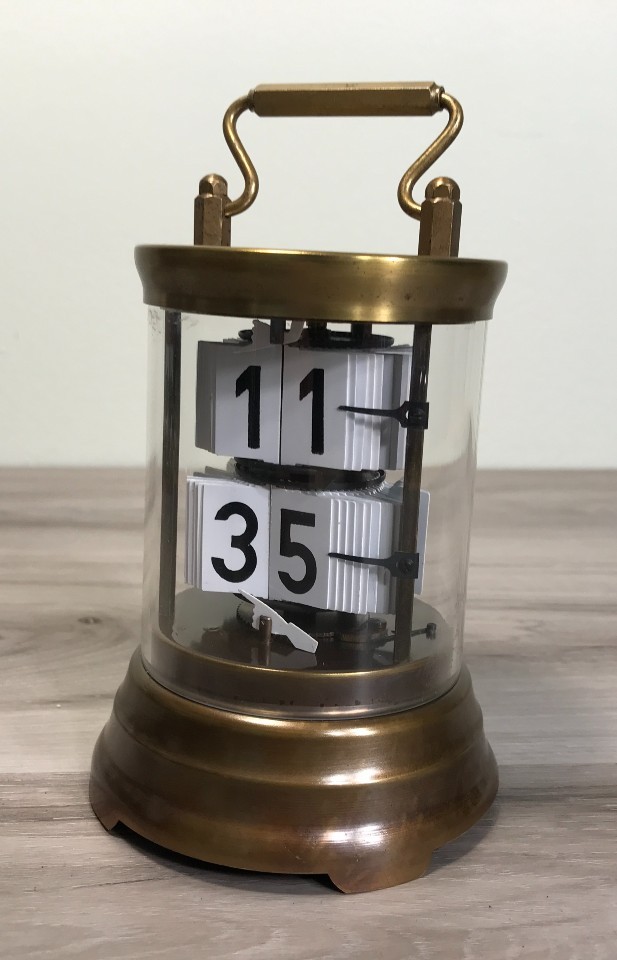
In 1969 Charles O. Terwilliger, as head of the Horolovar company, brought the Plato Clock history full circle, by producing a reproduction of the original, cylindrical brass and glass clock with the handled top, also known as Design 1. Terwilliger, in promotional material, described this clock as “so close to the original in outward appearance that only an expert can tell them apart” but adding that unlike the original one day clock, the Horolovar clock had a “7-jewel, 8-day movement.”[4] As mentioned, the clock was manufactured by Karl Lauffer Uhrenfabrik GmbH, Schwenningen, Germany and sold under the name Horolovar. The bottom plate of these clocks reads “West Germany, Seven (7) Jewels unadjusted, The Horolovar Company, Bronxville, New York.” The production of the clock ended in 1971. Collectors refer to these clocks as “the Hololovar Plato Clock.”
References
1. Charles O. Terwilliger, Jr. 1908-1988 In Memoriam, NAWCC bulletin volume XXX June 1988 No. 254 pg 238.
2. Eugene L. Fitch and the Plato Clock, NAWCC bulletin volume XI Oct 1964 No. 112 pg 447.
3. Eugene L. Fitch and the Plato Clock, Revised and Reprinted, June 1970, Charles Terwilliger. Publisher NAWCC, Incorporated, 1970, 23 pages.
4. Advertising pamphlet circa 1969 (German Clocks).
5. Charles Terwilliger; Joseph Fanelli (1987) “A Century of Fine Carriage Clocks” ISBN 10: 0916316041 ISBN 13: 9780916316044. Charles Terwilliger mini-autobiography from the inside flap of the dust jacket.
6. Clock Collectors – They watch time in motion by Anne Doll, Dayton Daily News, Friday January 6, 1967 pg 18.
7. From a phone conversation 8/1/2019 with owner of the Hololovar Company, Chris Nimon – who revealed that he has in his posession a letter indicating production of the Horolovar Plato clock ended 1971.
8. Museums Victoria Collections Accessed 10 August 2019.
9. Eveready Battery Company Accessed 10 August 2019.
10. US Patent. Clock. Inventor: Eugene Fitch. https://patents.google.com/patent/US733180.
11. US Patent. Time-indicator. Inventor: Eugene Fitch. for more information see other patents by Fitch.
12. American Electrical Novelty and Manufacturing Company Advertising brochure. The Improved Famous “Ever Ready” Plato Clock.
 HeroesofHorology.com